
Japan’s Tourism Boom Has a Dark Side
Updated: Oct 3

Japan is more popular than ever.
Tokyo, Kyoto, Osaka, Nara and Mt. Fuji are welcoming huge numbers of travelers from around the world.
For Japan, this is exciting. Tourism supports local businesses, creates jobs, and gives people from different cultures a chance to connect.
But there’s another side to the boom.
Crowded buses. Residents losing their privacy. Animals being mistreated. Private property being entered for photos. Even bamboo being carved with names.
This is overtourism — and it’s becoming one of the biggest challenges facing tourism in Japan.
So what’s actually happening?
1. Nara’s Deer Problem
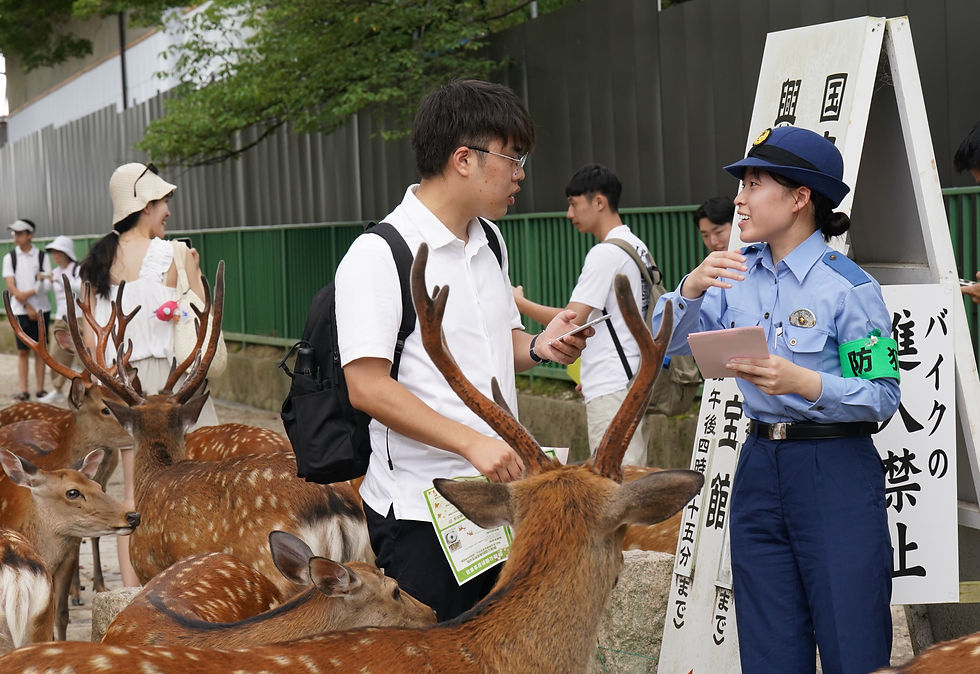
The deer of Nara are one of Japan’s most famous tourist attractions — but they aren’t props for photos.
Videos showing deer being kicked or hit have caused concern, and Nara has strengthened rules against harming them.
The prefecture also warns visitors not to tease the deer, feed them anything except special deer crackers, or leave trash they could accidentally eat.
The important thing to remember is simple: Nara’s deer are wild animals, not entertainment.
2. Graffiti in the Bamboo

Kyoto’s bamboo groves are another famous photo destination.
Unfortunately, some visitors have carved names, words and symbols directly into the bamboo in areas including Arashiyama and Fushimi Inari.
Kyoto now explicitly warns visitors against it. Damaged bamboo can decay, and carving into it can constitute property damage and lead to legal penalties.
Take a photo. Take a memory home.
Don’t leave your name behind.
3. The Gion Photo Problem

Seeing a maiko or geiko walking through Kyoto can feel like stepping into another era.
But remember: they are working.
Kyoto has repeatedly warned visitors not to chase, touch, stop, or photograph maiko and geiko without permission.
Residents have also raised concerns about unauthorized photography in the neighborhood.
Gion isn’t a movie set.
It’s a real neighborhood where people live and work.
4. Private Means Private

The same problem extends beyond maiko.
Kyoto has reported visitors entering private property or photographing private spaces while searching for the perfect shot.
The city specifically asks tourists to respect property laws and reminds visitors that Gion is a residential community as well as a tourist destination.
A beautiful alley does not automatically mean it’s a public attraction.
Sometimes, it’s simply someone’s home.
5. The Mt. Fuji Lawson

You may have seen this photo on Instagram.
A Lawson convenience store with Mt. Fuji rising perfectly behind it.
The view became so popular that crowds began gathering around the area.
Safety concerns became serious enough that Fujikawaguchiko installed a large black screen in 2024 to block the famous view.
The town said the measure was intended to protect both residents and tourists from traffic accidents.
It became a perfect example of modern overtourism:
One viral photo can send thousands of people to exactly the same spot.
6. The Food We Leave Behind

Food is treated with a lot of respect in Japanese culture.
Before eating, we say “Itadakimasu”, and after finishing, “Gochisousama.”
These simple expressions reflect an appreciation for the food, the people who prepared it, and everything that went into the meal.
In some cultures, leaving food on your plate can be completely normal — or even polite in certain situations.
In Japan, however, intentionally ordering much more than you can eat is generally not considered good manners.
The same respect applies after the meal. At food courts and self-service restaurants, you’re often expected to return your tray, separate your trash when required, and leave the table reasonably clean for the next person.
So enjoy as much Japanese food as you can — that’s part of the fun!
Just try to order an appropriate amount, finish what you can, and follow what the locals around you are doing.
Respecting Japan also means respecting the food you eat here.
7. Kyoto’s Crowded Buses

This may be one of the clearest examples of how overtourism can affect everyday life.
In Japan, many children travel to school independently, often using public transportation.
In Kyoto, some students have been unable to board city buses because they were already packed with tourists, causing problems with their daily commute to school.
The situation has become serious enough that Kyoto has introduced special sightseeing buses and is looking at ways to better separate transportation for tourists and local residents.
As a traveler, one small thing you can do is avoid using crowded public transportation during morning and evening rush hours whenever possible.
If your schedule is flexible, traveling a little later can leave more space for local residents commuting to work or school.
It may seem like a small gesture, but it’s a simple way to travel with respect for the people who live here.
Nobody has to behave badly for overtourism to become a problem.
Sometimes, there are simply too many people in the same place at the same time.
Tourists Aren’t the Enemy

None of these stories mean that tourists are bad.
And they certainly don’t mean that every foreign visitor behaves this way.
Most people come to Japan because they’re genuinely interested in the country, its food, history, people and culture.
The problem is what can happen when huge numbers of visitors, social media trends, and local communities collide.
Japan wants tourism.
But tourism also has to work for the people who actually live here.
Japan Isn’t a Theme Park
This might be the simplest rule for traveling in Japan:
Japan isn’t a theme park. It’s someone’s home.
Kyoto isn’t just temples and maiko.
Nara isn’t just deer.
Mt. Fuji isn’t just an Instagram background.
Behind every destination are people going to work, taking their children to school, running small businesses and simply trying to live their normal lives.
The more we remember that, the better we travel.
Travel Differently with Japanguin

This idea is at the heart of Japanguin.
Our Private Tokyo Tours aren’t designed around rushing from one famous attraction to another just to check boxes.
We want to show you another side of Tokyo — local neighborhoods, small restaurants, shopping streets, hidden temples and shrines, and places you might never discover on your own.
And whenever possible, we want you to connect with people, not just places.
Because overtourism doesn’t mean you should stop exploring Japan.
Maybe it simply means it’s time to explore Japan differently.
See less. Experience more. Go local.


Such an important reminder. Japan is an amazing place to visit, but we should always respect the people who actually live there. 🇯🇵