
Coming to Japan? These 5 Tips Could Save You Money

From exchanging money to tax-free shopping, these simple tips could save you money, time, and stress in Japan.
Japan is an amazing place to travel.
But Japan also has its own systems for money, transportation, shopping, and luggage that might be completely different from what you're used to.
And if you don't know about them?
You might end up spending more money, wasting time, or carrying a giant suitcase through Tokyo Station for absolutely no reason. 😅
So before you come to Japan, here are 5 things worth knowing.
1. Where Should You Exchange Money in Japan? 💴

First things first.
Yes, you should still carry some cash in Japan.
Japan has become much more card-friendly, and most hotels, convenience stores, department stores, and major restaurants accept cards.
But you can still encounter smaller restaurants, local shops, temples, ticket machines, and other places where cash is useful or sometimes necessary.
For a one-week trip, having access to around ¥30,000 in cash per person is a reasonable starting point. You don't necessarily need to carry all of it from day one.
But here's the question:
Where should you exchange your money?
We compared several currency exchange options in and around Tokyo in early October 2026, using USD → JPY as our example.
Exchange Location | Area | USD → JPY | $100 Gets You |
🥇 Dollar Ranger, Shinjuku | Shinjuku | ¥155.30 | ¥15,530 |
World Currency Shop | Machida | ¥154.16 | ¥15,416 |
Narita Airport GPA | NRT Airport | ¥153.66 | ¥15,366 |
Daikokuya | Takadanobaba | ¥153.00 | ¥15,300 |
Money Exchange | Akihabara | ¥149.00 | ¥14,900 |
Rates were checked between October 2 and October 4, 2026. Exchange rates change daily, so use this as a comparison rather than a guaranteed current rate.
🐧 Yohei's Tip
Our best rate was Dollar Ranger in Shinjuku.
It's also conveniently located. Many travelers visit or pass through Shinjuku during their Tokyo trip, so there's little reason to travel far across the city just to find a slightly better exchange rate.
And here's something that surprised us.
Exchanging money at the airport wasn't actually that bad.
In our comparison, exchanging $100 at Narita Airport gave you only ¥164 less than the best rate we found in Shinjuku.
So don't spend an hour traveling across Tokyo just to save ¥100 or ¥200.
The individual exchange shop seems to matter more than simply whether you're exchanging in central Tokyo, the suburbs, or the airport.
You can also withdraw Japanese yen directly from ATMs at convenience stores such as 7-Eleven. However, the final cost depends heavily on your bank, card, card network, foreign transaction fees, and ATM fees.
Check your card provider's international withdrawal fees before coming to Japan.
2. Japan's Tax-Free Shopping System Is Changing 🛍️

Shopping tax-free in Japan hasn't always been as simple as it sounds.
You buy clothes, cosmetics, souvenirs, or electronics at a large store, only to discover that the tax-free counter is somewhere else.
Then you find it. And there's a huge line. 😭
With the massive increase in international visitors, tax-free counters at popular stores and department stores can get very busy.
But from November 1, 2026, Japan's tax-free shopping system is changing significantly.
How does the new system work?
Instead of receiving the tax exemption immediately, Japan will introduce a refund system.

The basic process will be:
① Shop at a tax-free store
Pay the full price, including Japanese consumption tax.
You'll still need to provide the required traveler information, such as your passport details.
② Keep your tax-free purchases
Don't consume or use the items in Japan if you want them to qualify for the refund.
You may need to show the actual items when leaving the country.
③ Go through the tax-free procedure when leaving Japan
This is important:
Do this before checking in any luggage containing your tax-free purchases.
Customs may need to inspect the items.
④ Customs confirms that the goods are leaving Japan
At major airports, including Narita, Haneda, Kansai, Chubu, New Chitose, Fukuoka, and Naha, Visit Japan Web will also be incorporated into the new process.
⑤ Receive your refund
After Customs confirms your purchases, your tax refund can be processed.
The exact refund method may depend on the store, so check the instructions when you shop.
🐧 Yohei's Tip
Set up Visit Japan Web before your trip.
And don't pack all your tax-free purchases deep inside your checked suitcase before completing the procedure at the airport.
The new system should simplify some parts of tax-free shopping, including the removal of the special packaging rules previously used for consumable goods.
But remember:
Tax-free doesn't mean "buy it and use it in Japan."
If you can't show the products when required, you may lose your refund.
3. Get a Welcome Suica 🚃

If you're coming to Tokyo, don't buy an individual train ticket every single time you go somewhere.
Get a Welcome Suica.
Welcome Suica is a special version of Suica designed for international visitors.
You simply tap when entering and leaving train stations, and the correct fare is automatically deducted.
But it isn't just for trains.
You can also use Suica at many:
Convenience stores
Vending machines
Coin lockers
Restaurants
Shops
Buses
Basically, you'll probably end up tapping it multiple times every day.
Why Welcome Suica?
A regular physical Suica normally requires a ¥500 deposit.
Welcome Suica doesn't.
The physical Welcome Suica is valid for 28 days, making it perfect for most vacations.
The easiest option is to get one as soon as you arrive in Japan.
You can buy a physical Welcome Suica at:
Narita Airport: Terminal 1 and Terminal 2・3 stations
Haneda Airport: Terminal 3 Station
Major JR stations: Tokyo, Shibuya, Shinjuku, Ikebukuro, Ueno, and Yokohama
At Narita and Haneda, you can also purchase one from a Welcome Suica vending machine, so you don't necessarily need to wait at a service counter.
JR East generally limits sales to one card per person.
One important thing to remember:
You cannot get a refund for the remaining balance.
So don't put ¥20,000 on the card on your final day in Japan.
What about iPhone users? 📱
There's also Welcome Suica Mobile.
If you have a compatible iPhone, you can issue your Suica digitally and add money using an eligible card through Apple Pay.
The mobile version is currently valid for 180 days, which is much longer than the physical Welcome Suica.
🐧 Yohei's Tip
If your phone supports Welcome Suica Mobile, check that option first.
Otherwise, getting a physical Welcome Suica when you arrive at the airport is an easy way to make transportation in Japan much less stressful.
Want to Explore Tokyo Without the Stress?🐧

Planning transportation, choosing where to eat, figuring out what’s actually worth visiting...
Sometimes, the easiest way to enjoy Tokyo is to have a local take care of it with you.
With our Japanguin Private Tokyo Tour, we create the day around you, not a fixed itinerary.
Want to see the famous spots? Of course.
Want to explore local neighborhoods, find great food, practice some Japanese, or visit places most tourists miss? Even better.
You tell us what kind of Tokyo you want to experience, and we’ll build the day together.
👉 Explore Tokyo with Japanguin
4. Check for Tourist Coupons Before You Shop 🎟️

Here's something many visitors don't know.
Tax-free shopping isn't always the only discount available to you.
Some major Japanese stores offer additional coupons or discounts specifically for international visitors.
Before paying, take 30 seconds to check.
🛍️ Don Quijote
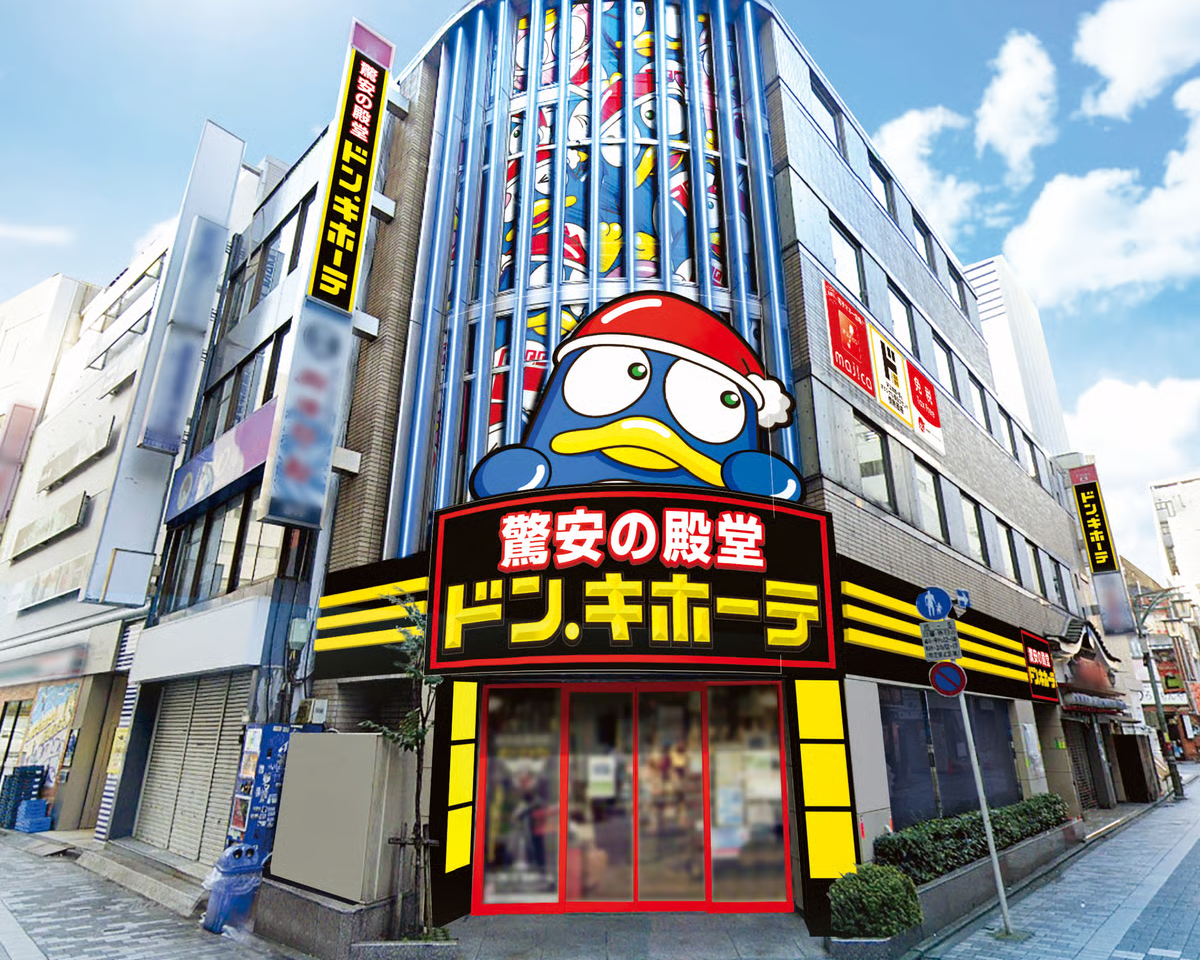
Don Quijote is probably already on your Japan shopping list.
Depending on the current promotion and payment method, eligible international visitors can receive an additional discount on top of tax-free shopping.
For example, Visa has offered eligible travelers an additional 5% OFF with qualifying purchases.
💊 Matsumoto Kiyoshi

Planning to buy Japanese skincare, cosmetics, medicine, or snacks?
Check for a Matsumoto Kiyoshi tourist coupon before paying.
Visitor promotions can offer additional discounts depending on how much you spend.
📷 BicCamera

Buying electronics, cameras, beauty products, or appliances?
They also regularly offers special discounts for visitors, sometimes in addition to tax-free shopping.
Some brands and products may be excluded, so check the conditions first.
🏬 Mitsukoshi & Isetan

Even Japanese department stores have visitor discounts.
Eligible international visitors can access a 5% shopping coupon at participating Mitsukoshi and Isetan stores, although some luxury brands and products are excluded.
🐧 Yohei's Tip
Before shopping at a major Japanese chain, search:
"[Store name] tourist coupon Japan"
It takes 30 seconds.
If you're spending ¥30,000, ¥50,000, or ¥100,000, that tiny search could save you thousands of yen.
Don't stop at "Tax-Free." Check whether there's another discount available.
5. Travel Smarter: Send Your Luggage 🧳

Imagine this.
You check out of your hotel in Tokyo with a giant suitcase.
You take it down the stairs.
Drag it through Shinjuku Station.
Squeeze onto a crowded train.
Navigate Tokyo Station.
Get on the Shinkansen.
Arrive in Kyoto.
Drag it all the way to your next hotel.
There is a much easier way.
Send it!!
Japan has an incredibly convenient luggage delivery system, often called Takkyubin.
You can send your suitcase between places such as:
Hotel → Hotel
Airport → Hotel
Hotel → Airport
And in many cases, you can also arrange delivery through convenience stores or dedicated service counters.
For example, if you're traveling from Tokyo to Kyoto, you can send your large suitcase ahead and travel with only a backpack or small overnight bag.
Your luggage meets you at your next hotel.
How much does it cost?
The exact price depends on the size of your suitcase and the distance.
For a typical suitcase, expect to pay roughly a few thousand yen for delivery between major cities.
Yes, it costs money.
But think about what you're buying:
No dragging a suitcase through huge stations.
No worrying about crowded trains.
No searching for elevators.
No stressing about oversized luggage on the Shinkansen.
For many travelers, that's money well spent.
🐧 Yohei's Tip
Don't send anything you'll need immediately.
Delivery isn't always same-day, so keep your passport, medication, valuables, chargers, and at least one change of clothes with you.
Ask your hotel:
"Can you send my luggage to my next hotel?"
Many hotels can help you complete the delivery form and arrange everything at the front desk.
Small Tips Can Make a Big Difference 🇯🇵

You don't need to memorize hundreds of Japan travel hacks before your trip.
But knowing a few things before you arrive can make a surprisingly big difference.
Exchange your money somewhere sensible.
Understand the new tax-free system.
Get a Welcome Suica.
Check for tourist coupons.
And please don't drag a 25kg suitcase through Tokyo Station if you don't have to. 😂
Japan is already one of the easiest countries to travel around once you understand how things work.
Sometimes, the difference between a stressful trip and a smooth one is simply knowing the system before you arrive.
Save money. Save time. Travel smarter. 🇯🇵🐧


Comments